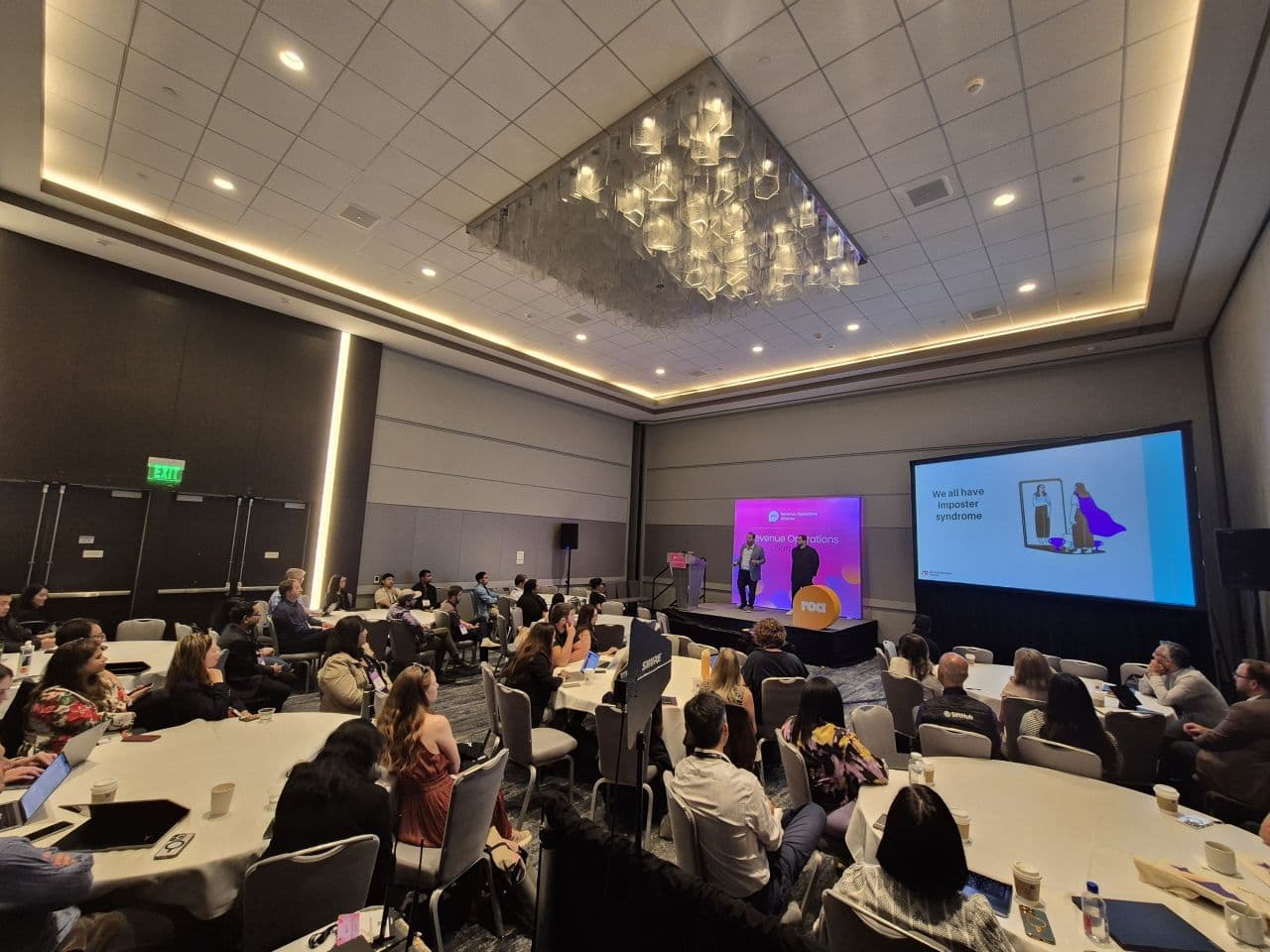
If there was one takeaway from the 2025 Chief Revenue Officer Summit in San Francisco, it’s this: The future of revenue isn’t just about AI — it’s about trust. Funny coming from a founder of an AI company? Let’s dig into the why
2024 saw over $13.8 billion poured into AI across go-to-market teams. Yet 67% of CROs admit they don’t trust their own data. That’s the paradox of modern revenue leadership: investing in automation, but doubting its foundation.
As we listened in on conversations with leaders from SaaS, enterprise tech, and scaling startups, five big themes stood out. Each reflects where GTM is heading, and what needs to evolve for AI to become a real growth partner.
1. The AI Investment vs Data Trust Gap
Everyone is rushing to implement AI, but few are fixing the inputs it relies on. The result is sophisticated systems built on shaky data foundations.
Larger organizations feel this more — more layers, more change management, slower time-to-value.
Leaders believe in AI but they just don’t trust how it reaches its conclusions.
The shift that we need is from ‘AI as a black box’ to ‘AI as a learning partner’. Teams want systems that show their work, learn from feedback, and earn credibility over time — just like a high-performing teammate would.
2. Scaling Beyond Hustle
CROs agree that AI-assisted ICP targeting is helping improve top-of-funnel quality and conversion. But scaling isn’t just about smarter targeting - it’s about integrated intelligence.
The most successful teams pair operational excellence (RevOps, enablement, data) with centralized knowledge across CRM, content, and customer insights. Without a solid foundation, expanding internationally or across product lines just multiplies confusion.
In short: the best GTM teams are no longer “doing more.” They’re doing less, better — together.
3. Culture as a Data Layer
One of the most human discussions was about culture. Founders want their early sales DNA: the ownership, the urgency to scale. But as teams grow and shuffle through over the years, that DNA is often lost.
The leaders who get it right treat culture like a data layer. Something that’s continuously reinforced and shared across the organization with every new hire, not left behind in the founding team’s memories.
Regular face-to-face connection, shared goals, and cross-functional rituals matter more than ever. Because culture, like data, compounds if you invest in it.
4. Leadership Transparency for Growth
Transparency is becoming a competitive advantage. CROs who share company performance, product direction, and results openly are seeing stronger engagement, along with equity and talent mobility being part of the model.
The message was clear: When people understand why the company is growing, they help it grow faster. Visibility is the real multiplier.

So Where Does AI Fit In?
Across all these themes, it became clear that AI is no longer optional, but part of the infrastructure. The real differentiator will be how intelligently teams use it to connect silos, build trust, and accelerate learning.
In other words, agentic systems will start to resemble great teams - they’ll get better with time. As they learn from every deal, campaign, and customer conversation, their results will compound.
At Hivekind, we’re building toward that vision: where your GTM system acts as the second brain for your team, learning and improving with every interaction.