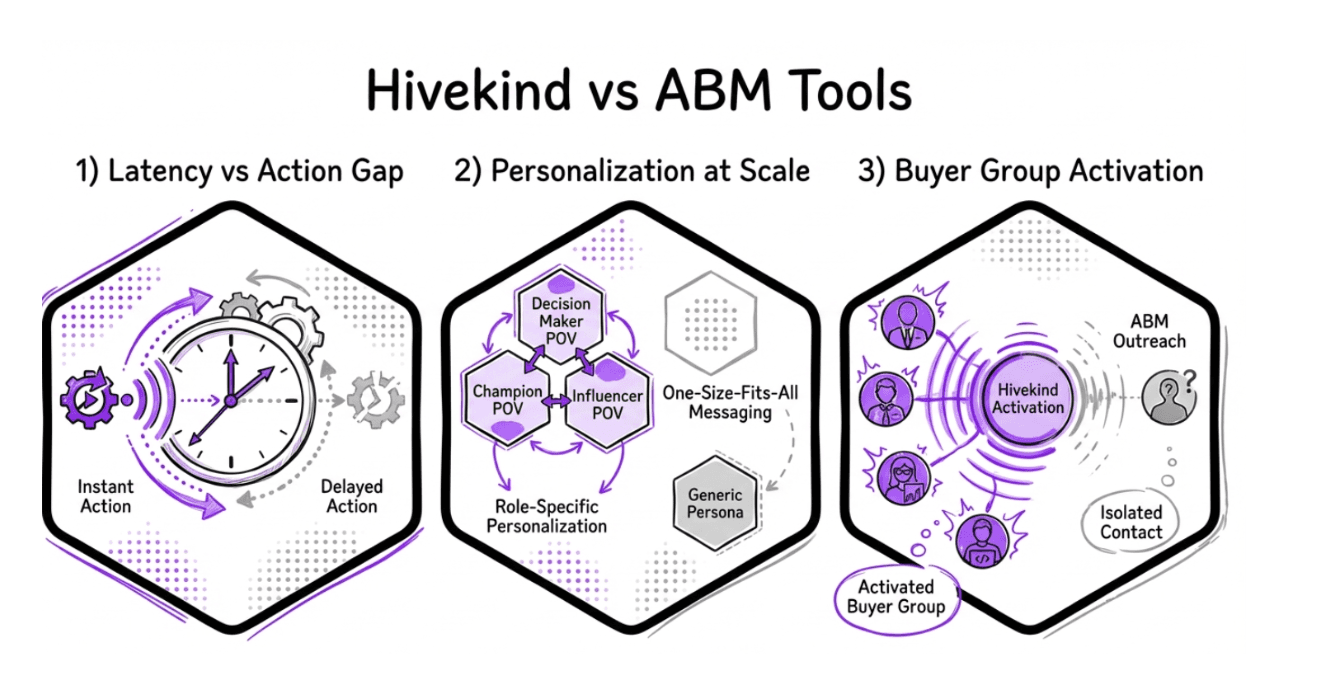
Hivekind vs ABM Tools
ABM platforms (6sense, Demandbase, Bombora, etc.) solved an important problem in the last cycle: intent visibility. They helped GTM teams see who might be shopping. Great.
But here’s the unfortunate reality in 2026:
Static Intent does not create a direct pipeline.
Knowing an account is browsing doesn’t magically turn into meetings. The bottleneck today is getting the full buyer group to activate fast enough that a real opportunity forms : not six weeks into a sequence, not after 28 persona guesses.
Everyone including your competition gets those same stale signals and reaches out with the same cadence. Where is the edge?
The Comparison Framework
1. The Latency vs Action Gap
ABM tools run on batch and reporting cycles.
Buying happens in real time.
ABM gives you:
- daily/weekly intent refresh
- segments that age out
- campaigns that take weeks to stand up
Real buyers do:
- VP hits pricing at 10:05
- RevOps checks ops feasibility at 10:07
- CTO reads docs at 10:10
ABM just tells you which account 2 days later by the time the decision is already made.
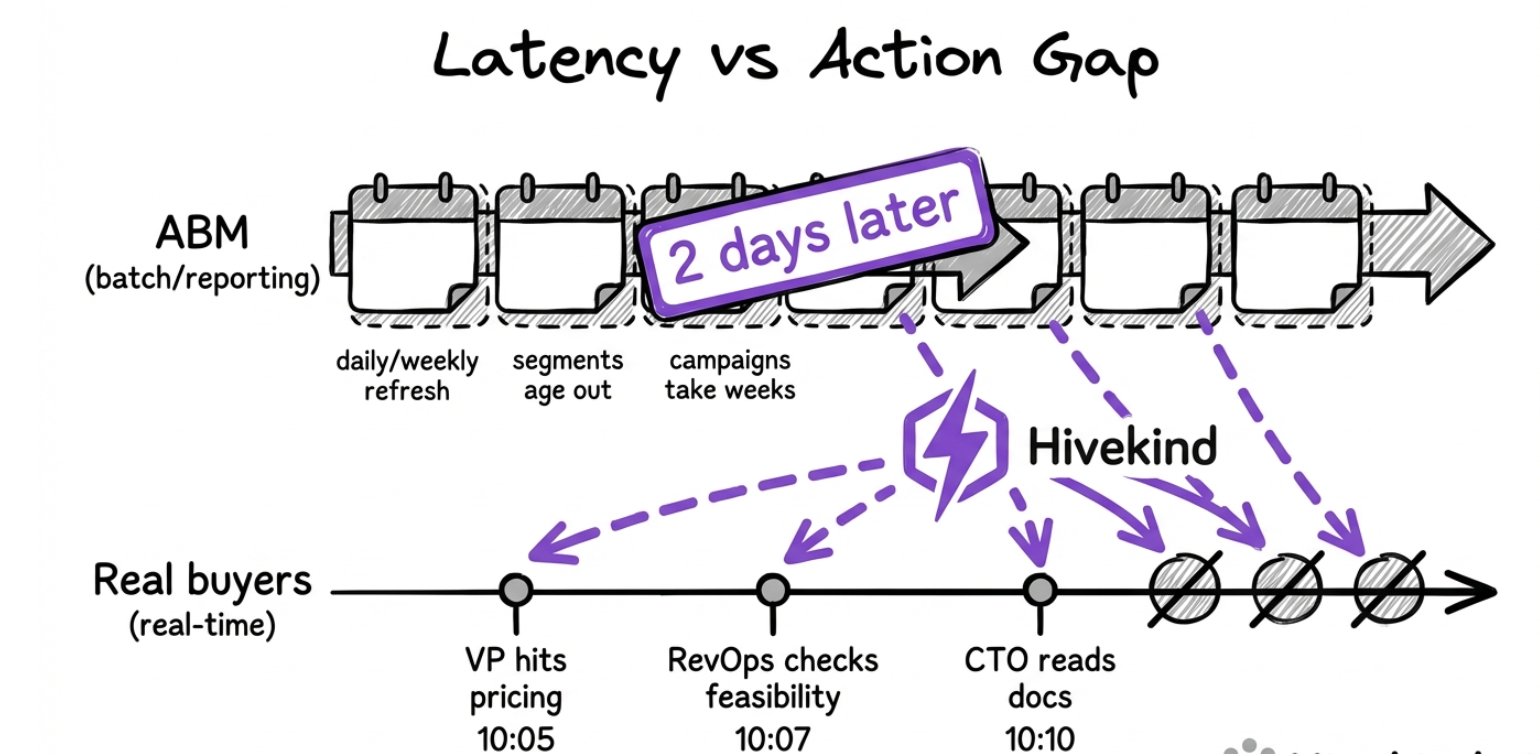
Here’s how ABM tools compare to Hivekind with respect to this
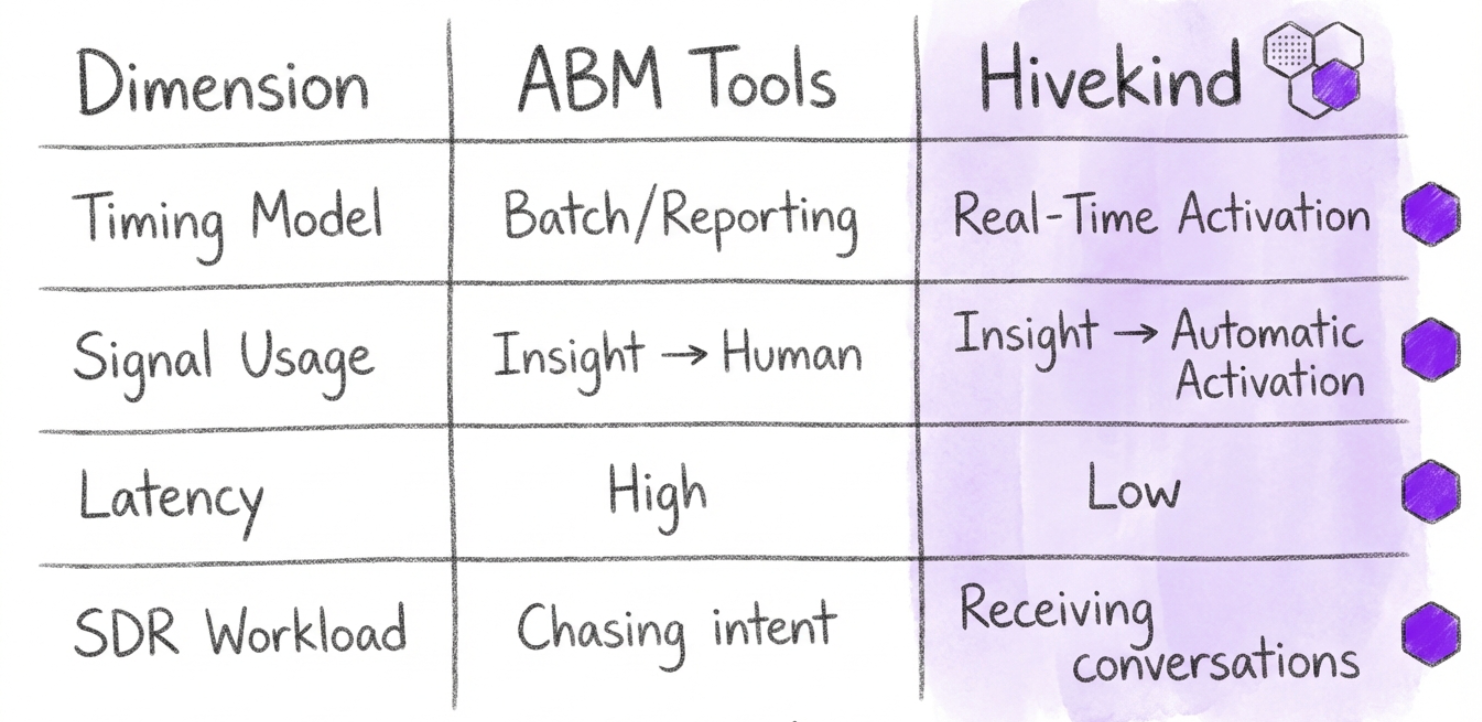
2. Personalization at Scale (Not Segmentation)
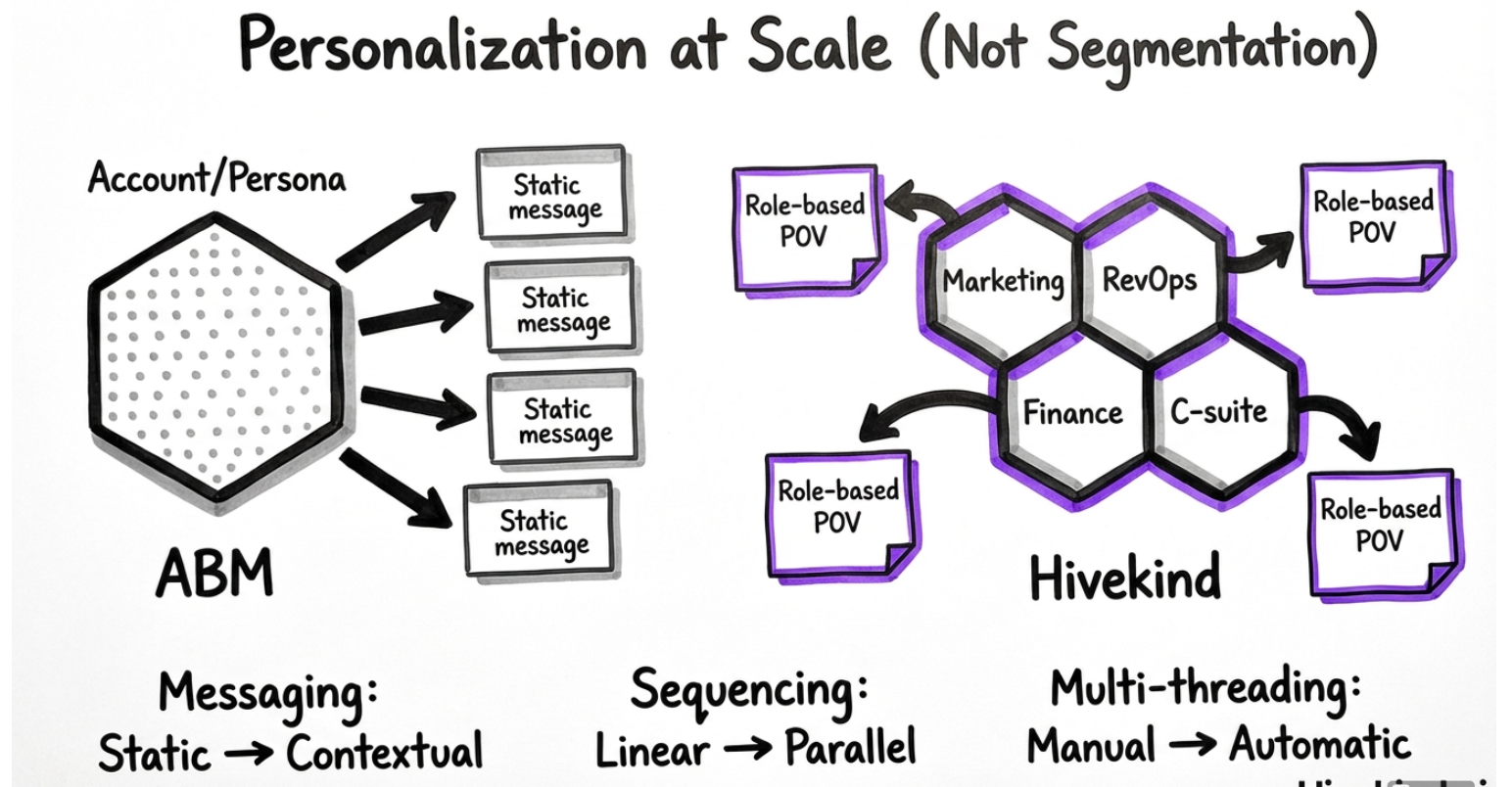
ABM personalizes at the account or persona level, which is fine for advertising.
But activation requires role-specific POV, because different stakeholders don’t care about the same things:
- Marketing : justification narrative
- RevOps : integration & data sanity
- Finance : budget + ROI
- C-suite : urgency + prioritization
While current tools enable segmentation, they fall short of true personalization-at-scale. A sales sequence built in a traditional platform is still a pre-defined workflow.
What is missing is an agentic capability aka an autonomous AI that can not only identify the who and the when (like 6sense) but also instantly determine the what and the how (the optimal message, channel, and next step) for a specific individual based on their unique, real-time signal.
3. The Buyer Group Activation Problem (Silent Deal Killer)
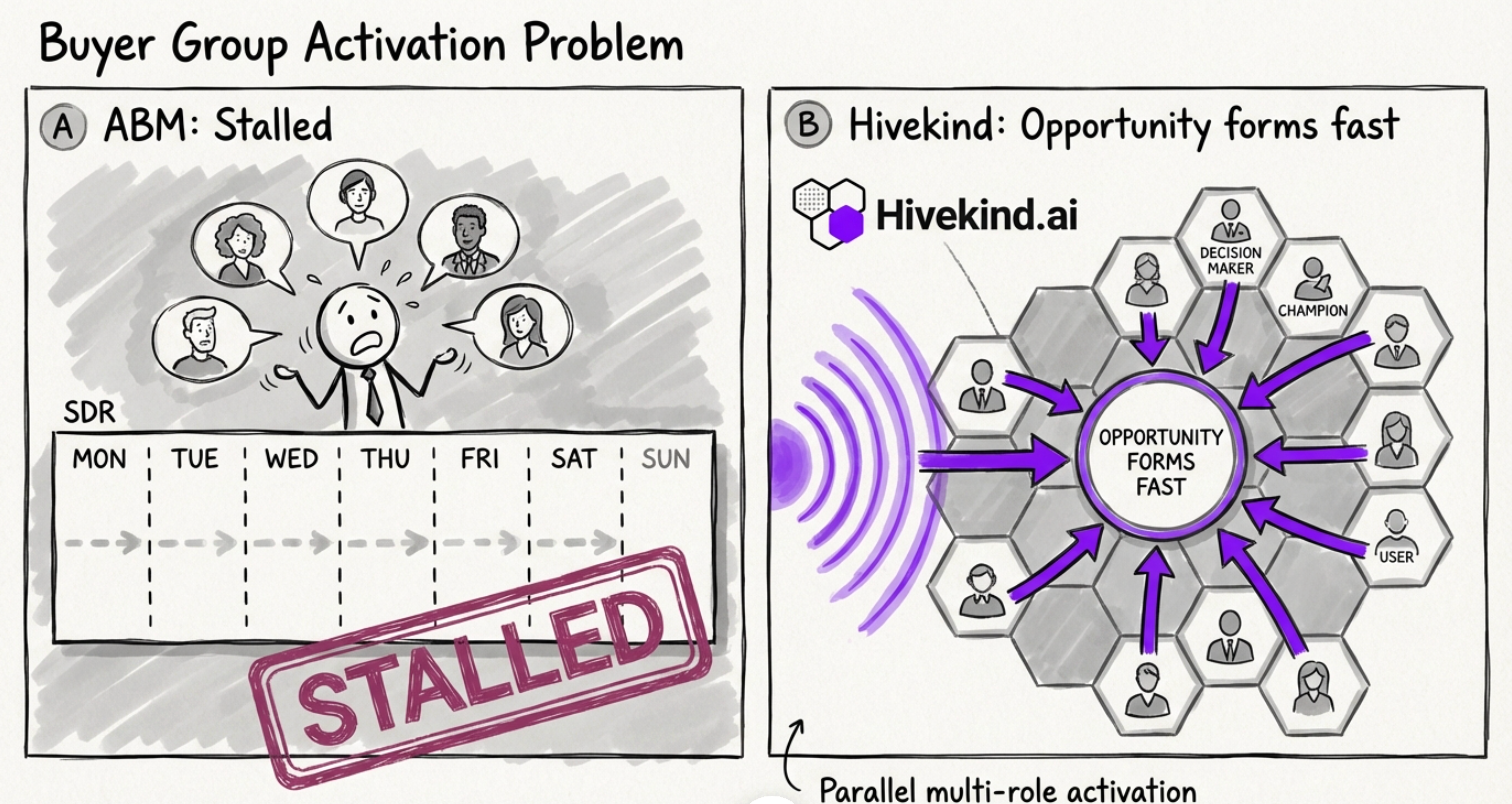
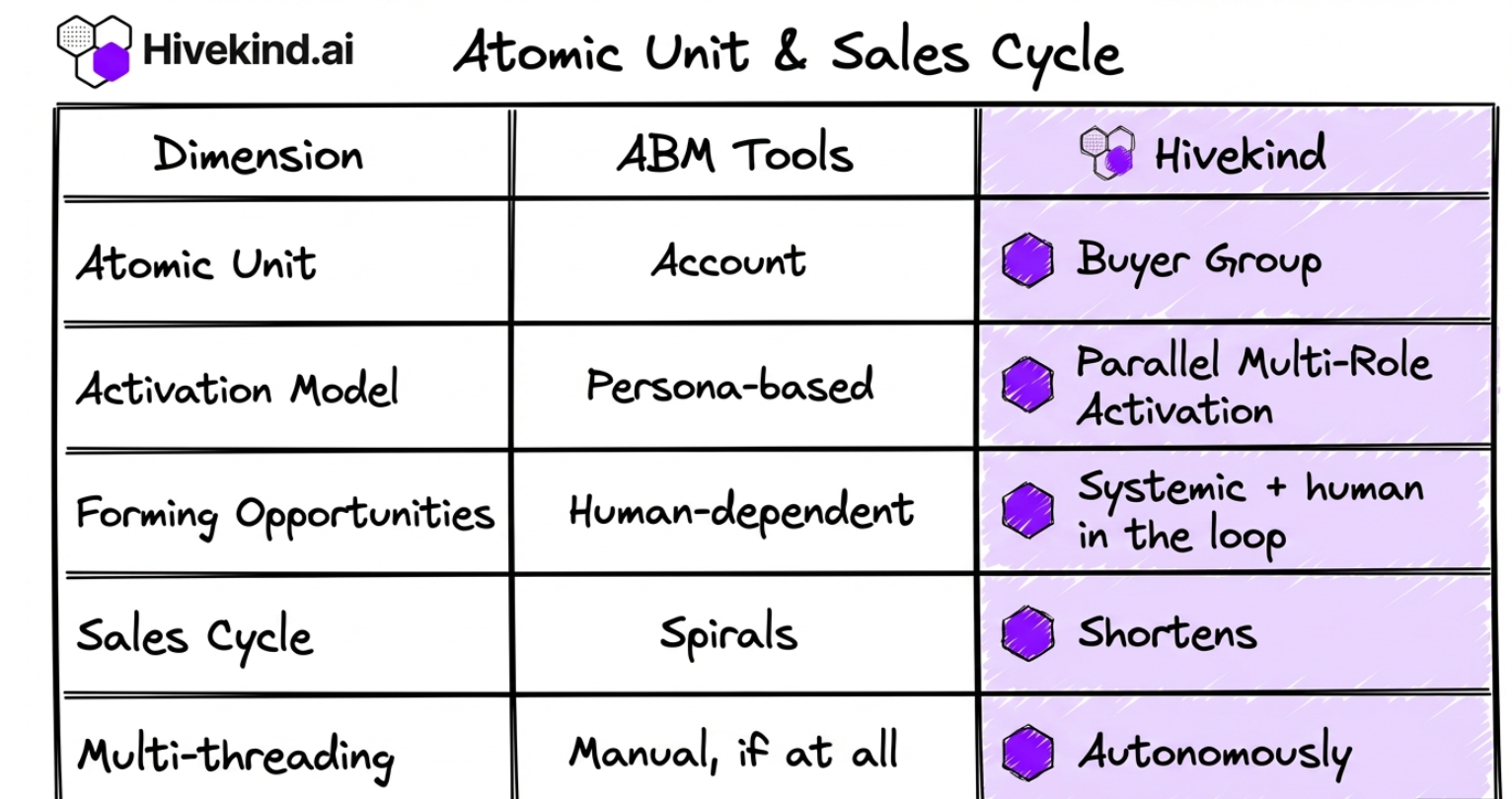
ABM treats each persona separately and leaves SDRs to multi-thread manually over weeks. Which is absurdly slow given how modern buying committees behave.
Hivekind activates all required roles simultaneously so the deal energy forms faster and with less human brute force.
This is the hidden reason why:
- deals stall early
- SDRs burn cycles
- CROs can’t predict pre-pipeline
What CROs Actually Care About?
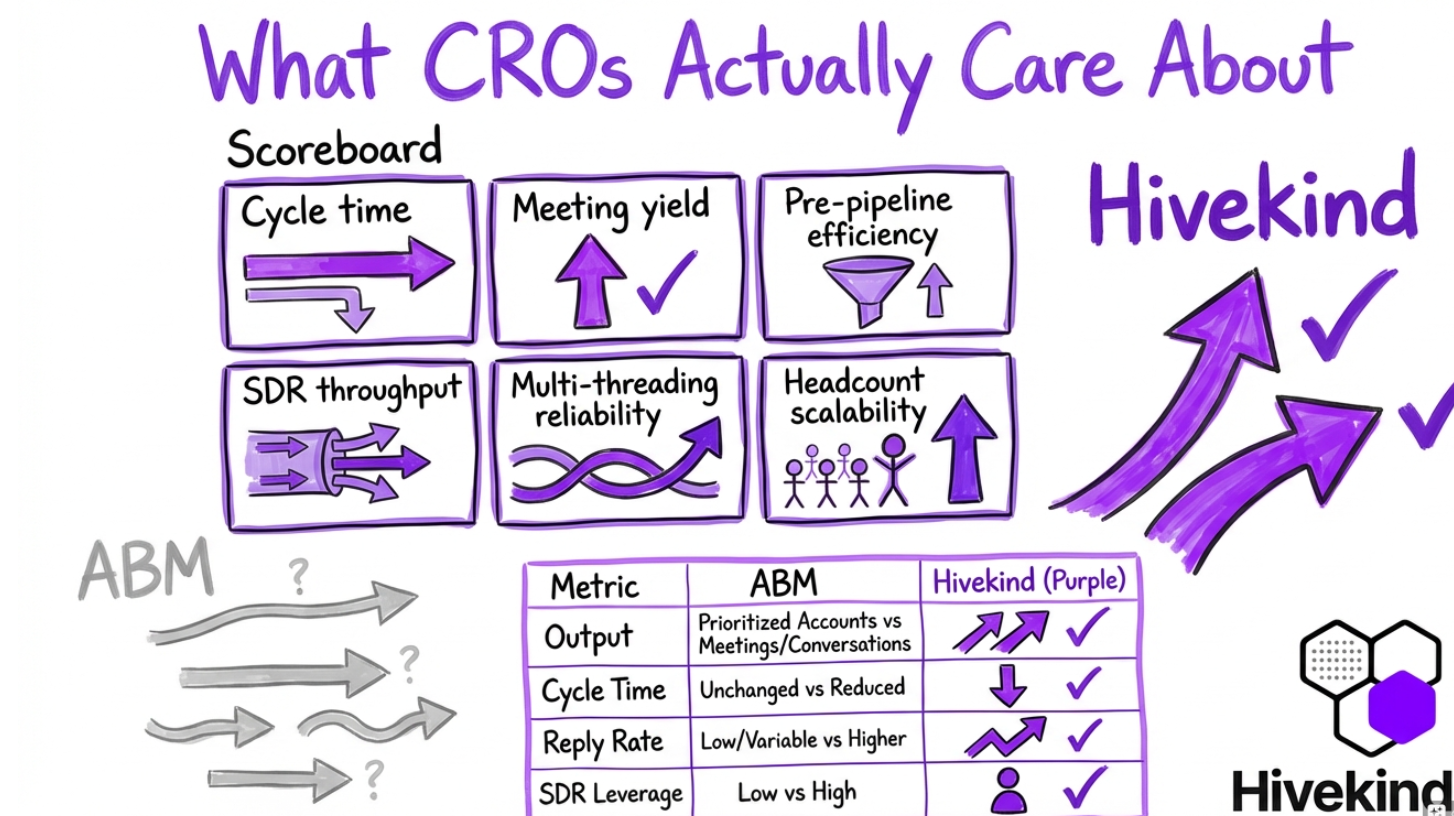
GTM teams don’t lose sleep over intent visibility or segmentation logic.
They care about:
- cycle time
- meeting yield
- pre-pipeline efficiency
- SDR throughput
- multi-threading reliability
- headcount scalability
If ABM tools put a hole in your pocket without actual quantified results, book a demo to see Hivekind in action.