Hivekind vs. AI SDR Platforms: Why Augmentation Beats Full Automation in Pre-Pipeline Creation
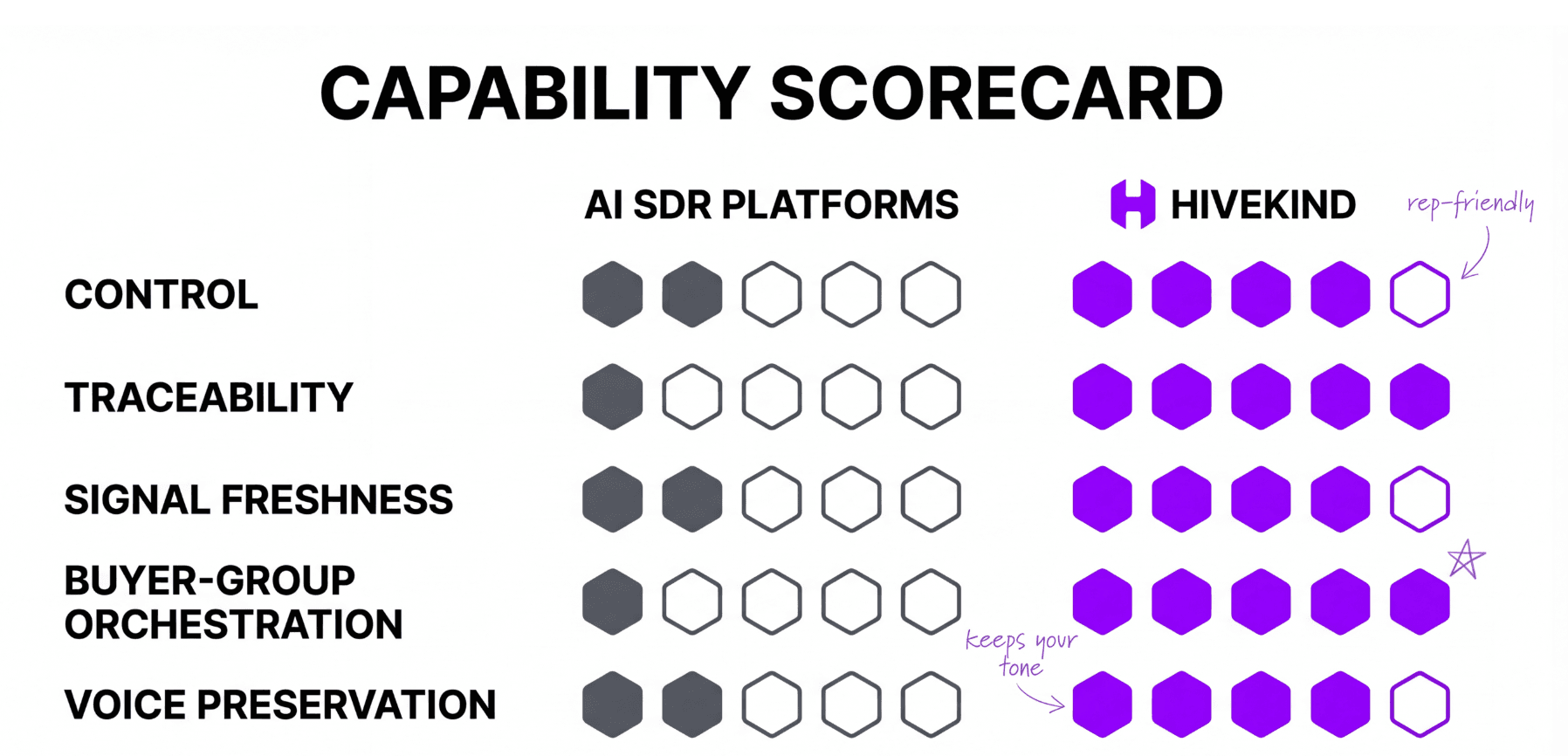
AI SDR platforms like Artisan and 11X try to replace the SDR through full automation: autonomous research, autonomous messaging, autonomous sequencing. The promise is simple: eliminate human reps, lower CAC, and scale outreach.
But as the market matures, the operational bottleneck has shifted.
Teams don’t just need automation or agents; they need better pre-pipeline decisions, cross-buyer coordination, and high-context outreach that a human can seamlessly take over without cognitive overhead.
This is where Hivekind diverges.
Hivekind is a pre-pipeline platform that augments the rep instead of replacing them; identifying the best-fit accounts, coordinating the buyer group, tracing intent signals, and generating contextual narratives with transparent decision logic.
The result is a fundamentally different user experience, workflow, and outcome profile compared with “AI SDR” tools.
1. The Autonomy vs. Augmentation Split
AI SDR platforms are built around full autonomy:
- They scrape intent data
- Select prospects
- Auto-generate messaging
- Run the sequence
The user’s role is minimal. The process is a black box: set up, deploy, evaluate.
Hivekind takes the opposite approach: augment the rep’s judgment in the pre-pipeline phase, where strategic nuance matters most.
Hivekind:
- Prioritizes your best-fit accounts
- surfaces buyer groups, complete with their roles in the deal
- explains why outreach is triggered
- drafts contextual messaging for each role
- allows the rep to refine or inject voice
- synchronizes multi-channel manual + automated actions
2. The Control Gap and “Human-in-the-Loop” Handover
AI SDR tools introduce a control problem: once the sequence is sent, taking over the conversation feels jarring. The messaging lacks traceability, and reps struggle to inherit context mid-flight.
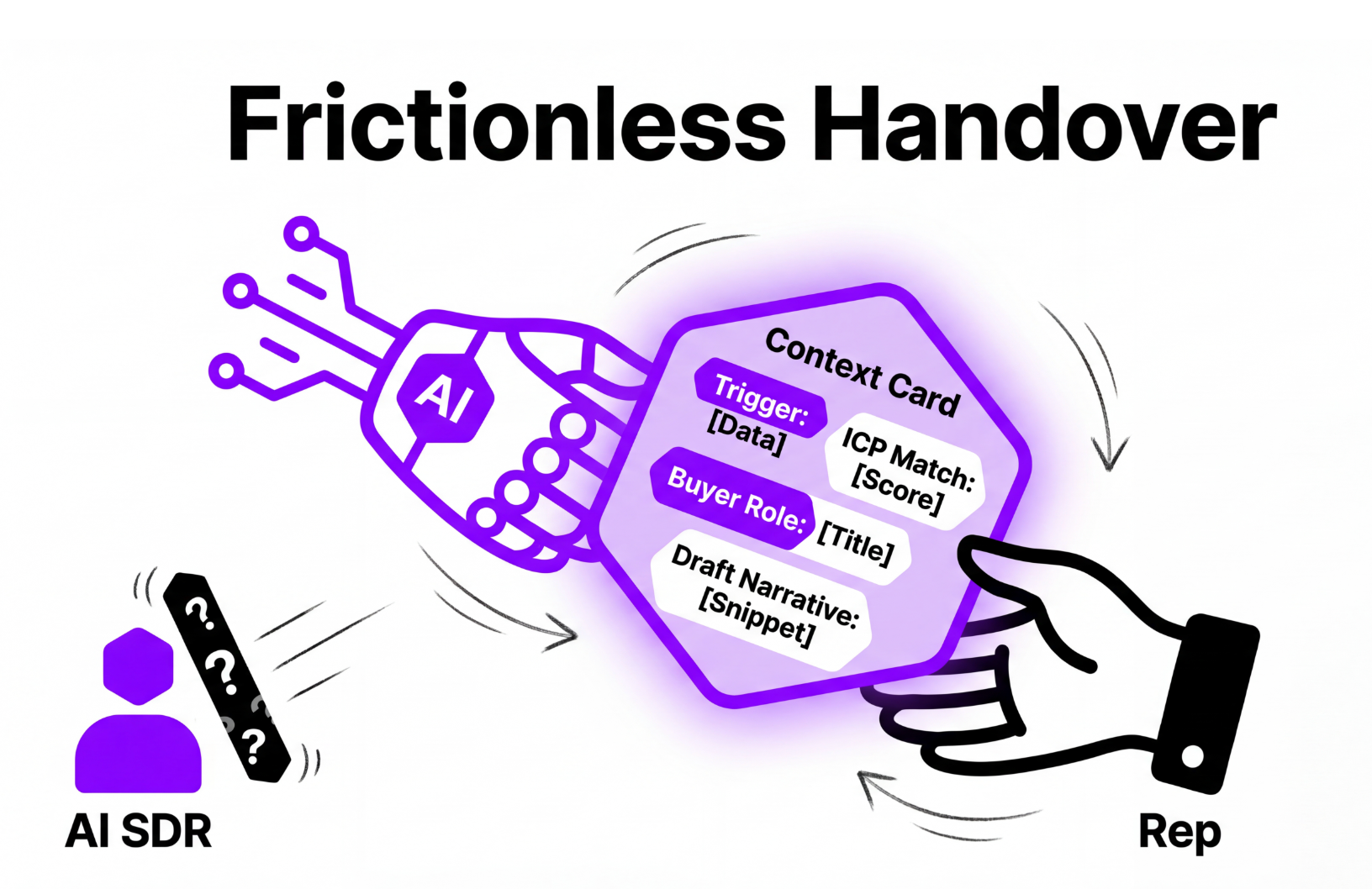
Hivekind is built for frictionless handover:
- AI handles the heavy lifting (monitoring signals, drafting outreach, surfacing buyer groups)
- The rep provides taste, strategy, and prospecting decisions
This preserves the rep’s voice, intuition, and account strategy which are the traits that complete automation cannot generate.
The result is human + agent cooperation, not replacement.
3. The Decision Transparency Gap (Contextual Explainability)
Users increasingly reject black boxes. They want to know:
- Why did the AI choose this lead?
- What triggered this outreach?
- Why this message? What context was considered?
- Why now? Is there a specific signal identified?
AI SDR tools rarely expose this reasoning. Messaging feels arbitrary even when well-written.
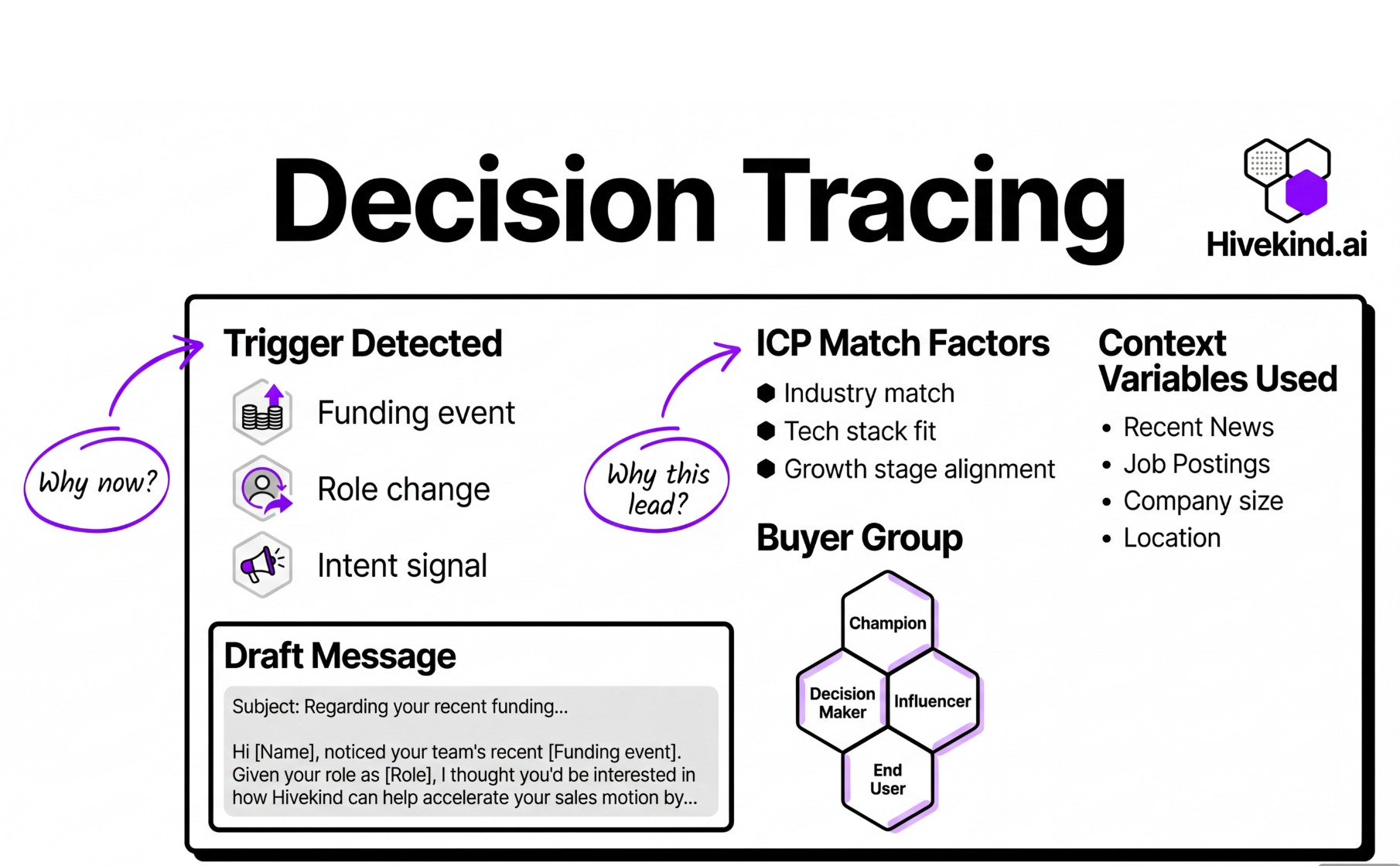
Hivekind introduces Decision Tracing:
- Every outreach event includes a structured signal feed
- Each message cites context variables (buyer signals, product triggers, ICP matching, role mapping, timing)
This transforms prospecting from black box automation to collaboration between rep and the tool.
4. Static Personalization vs. Real-Time Signal Activation
Most AI SDR personalization is static:
- Scrape profile once
- Extract facts
- Apply templates for the entire sequence
This feels generic and AI-coded.
Relevance requires real-time signal tracking:
- Buyer posts content
- Company triggers an intent signal
- Role changes
- New product launch
- Funding event
- Product review
- Internal job changes
This converts outreach from profile-based to behavior-based or response based aka the key to relevance.
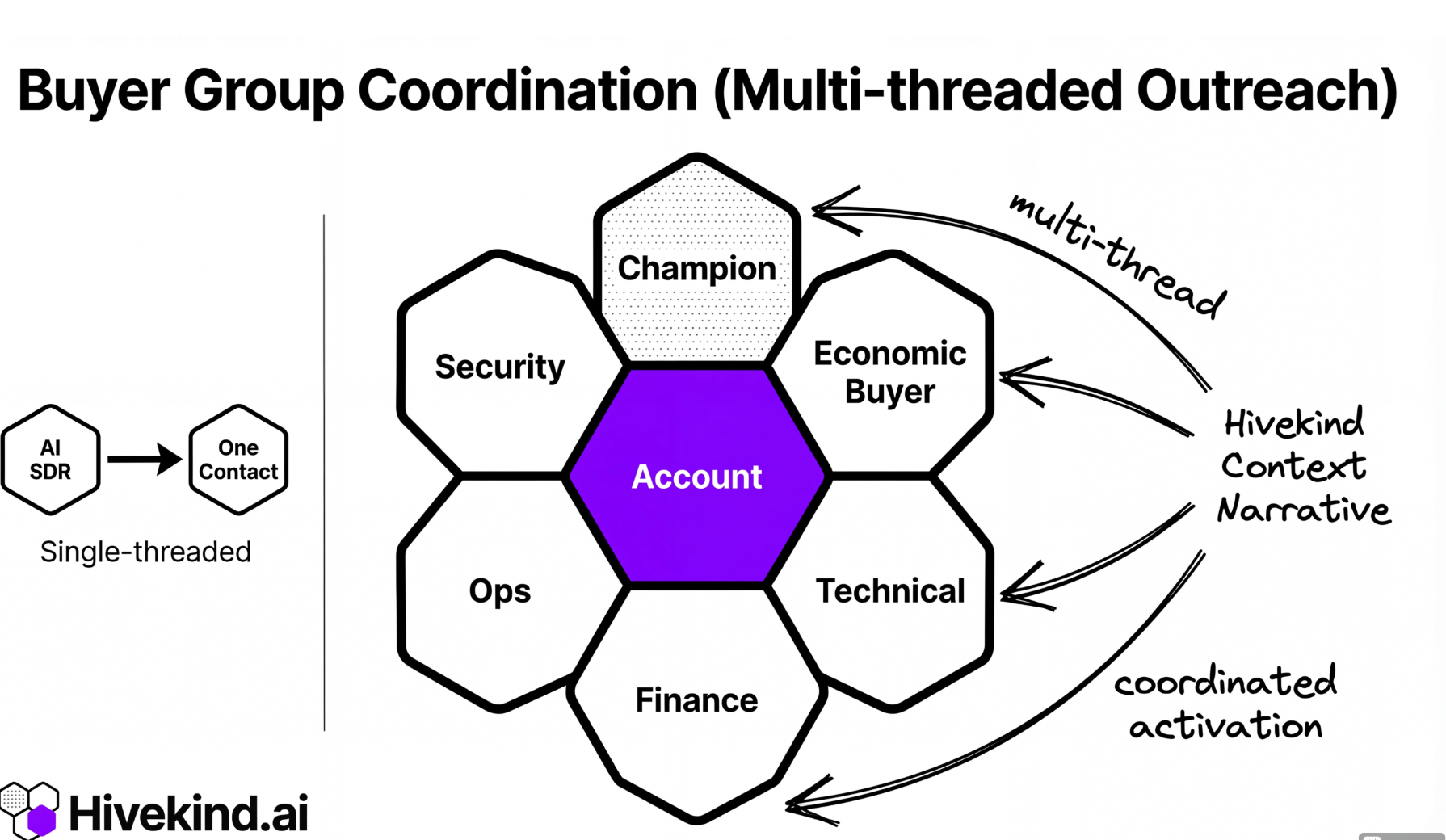
5. Buyer Group Coordination vs. Single-Threaded Outreach
AI SDR platforms remain single-threaded. They treat accounts as individual contacts.
Hivekind models the buyer group, not the individual:
- Maps stakeholders
- Classifies roles
- Aligns messaging by persona
- Orchestrates multi-threaded outreach
Pre-pipeline quality improves because activation happens across the group, not just a single persona.
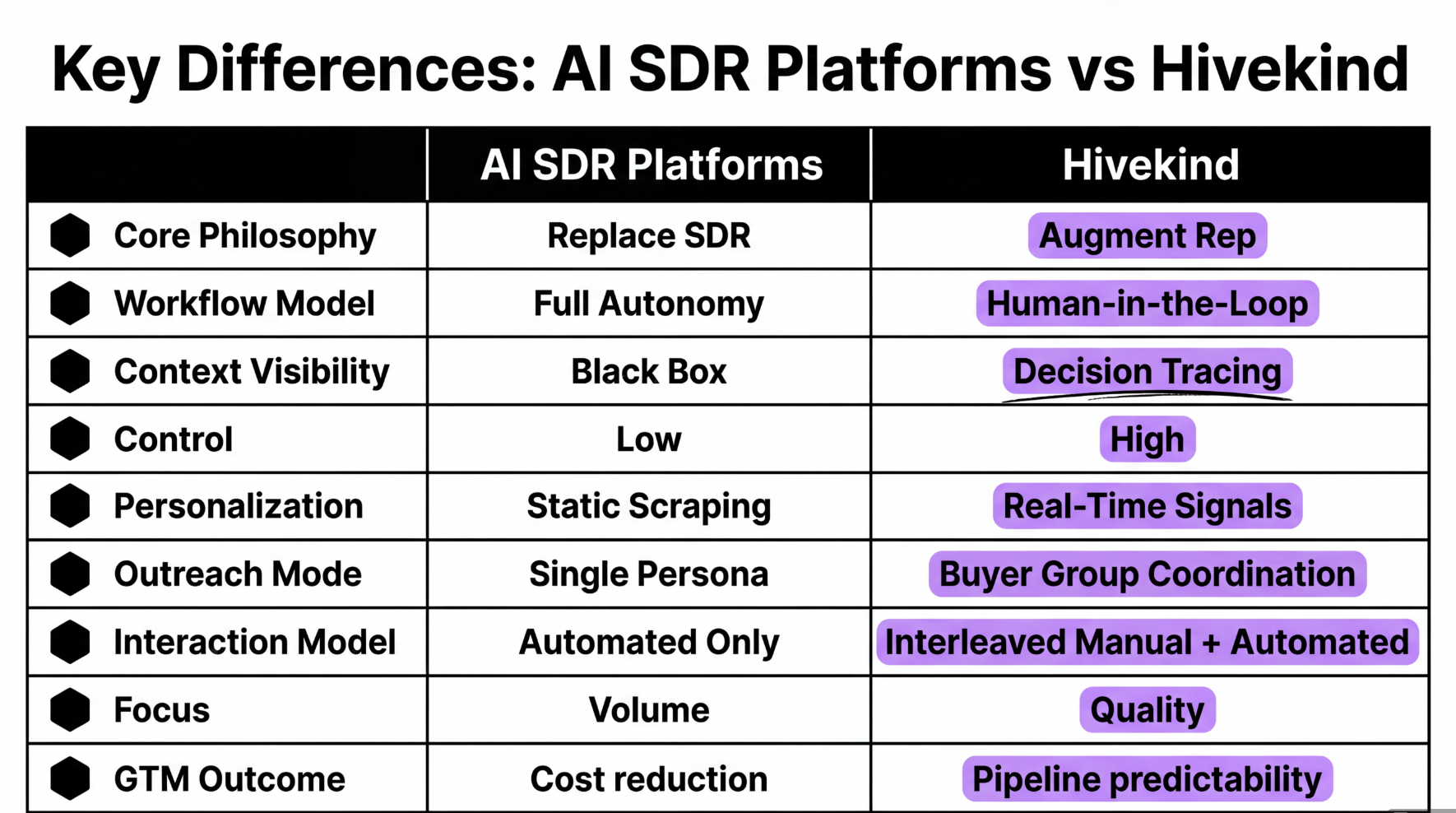
AI SDR platforms optimize for:
- lowering labor
- increasing message volume
- scaling repetitive outreach
Hivekind optimizes for:
- improving account activation
- raising conversion rates
- Securing key stakeholder buy-in
- Sharing context with humans
- multi-buyer orchestration
If you are looking to create a pipeline for your B2B SaaS by empowering your sales reps, let’s talk.