
Agent Maturity
Agent frameworks are now reliable, and have matured to coordinate real-time decisions across functions.
In complex B2B sales, buying decisions form across fragmented signals and large stakeholder groups months before an opportunity reaches CRM. Most revenue organizations operate blind during this phase.
An agentic decision layer that determines which accounts deserve attention, when revenue teams should act, and how to coordinate sales, marketing, and partner motions around real buying conditions.
CRM systems manage known opportunities. Hivekind helps determine where pipeline comes from next.
THE SHIFT
Legacy enterprise revenue teams stitch together 6sense, Demandbase, ZoomInfo, Outreach, Clay and Claude. Hivekind unifies these as a single decision layer.
ICP defined once, then forgotten
CRM captures activity after intent forms, pretending pipeline starts with MQL
One contact engaged per account
Built before AI could make real-time decisions at account scale
Strategy lives in decks and spreadsheets, inconsistently used in execution
Human teams manually interpret fragmented signals
Accounts scored and reprioritized seamlessly
Buying conditions evaluated before opportunities exist
Full buyer committees mapped and coordinated
Built natively on agentic AI: decisions requiring 10 analysts now happen continuously
Every GTM decision and action grounded in strategy
Signals evaluated instantly across accounts and buying groups
The Problem
B2B revenue execution breaks because enterprise buying behavior is evolving fast — faster than what human coordination systems can manage. Expanded buying groups. Fragmented signals. Sales, marketing, and partners drifted apart.
Today's revenue teams operate with delayed visibility, fragmented execution, and intuition-based account prioritization — resulting in GTM by default and poor pipeline quality.
Why Pre-Pipeline Exists Now
Agent frameworks are now reliable, and have matured to coordinate real-time decisions across functions.
The collapse of cold outbound has made account precision the only sustainable GTM advantage.
The average enterprise deal now involves 11 stakeholders — well past what human coordination can manage.
These three simultaneous shifts require teams to build pre-pipeline decision infrastructure — only computational coordination can keep up with enterprise buying complexity.
The Solution
Every GTM tool executes. Does any know your strategy?
Hivekind's Context Library is the persistent intelligence layer that connects your positioning, ICP definition, buyer personas, competitive context, and proof points to every decision the system makes. Strategy stops fossilizing in a deck — it lives in the engine.
Your GTM strategy infrastructure
No more disconnected orchestration. Revenue teams operate on a shared core infrastructure.
Your GTM strategy infrastructure
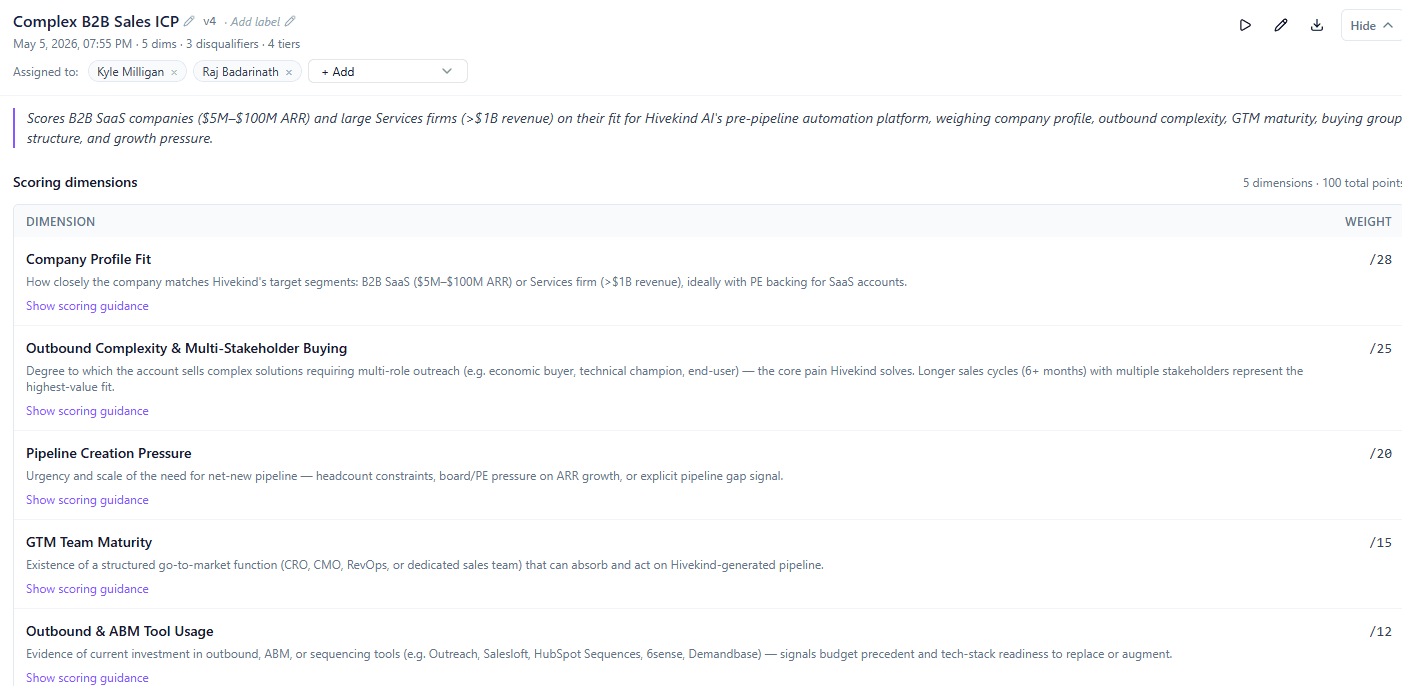
Hivekind identifies which accounts deserve attention based on real buying conditions — not static ICP assumptions alone. The system evaluates the real account situation:
At scale, this means sales, marketing, and partner teams chase 40% fewer accounts with 3X the conversion rate — because every account in the list has a real reason to buy now.
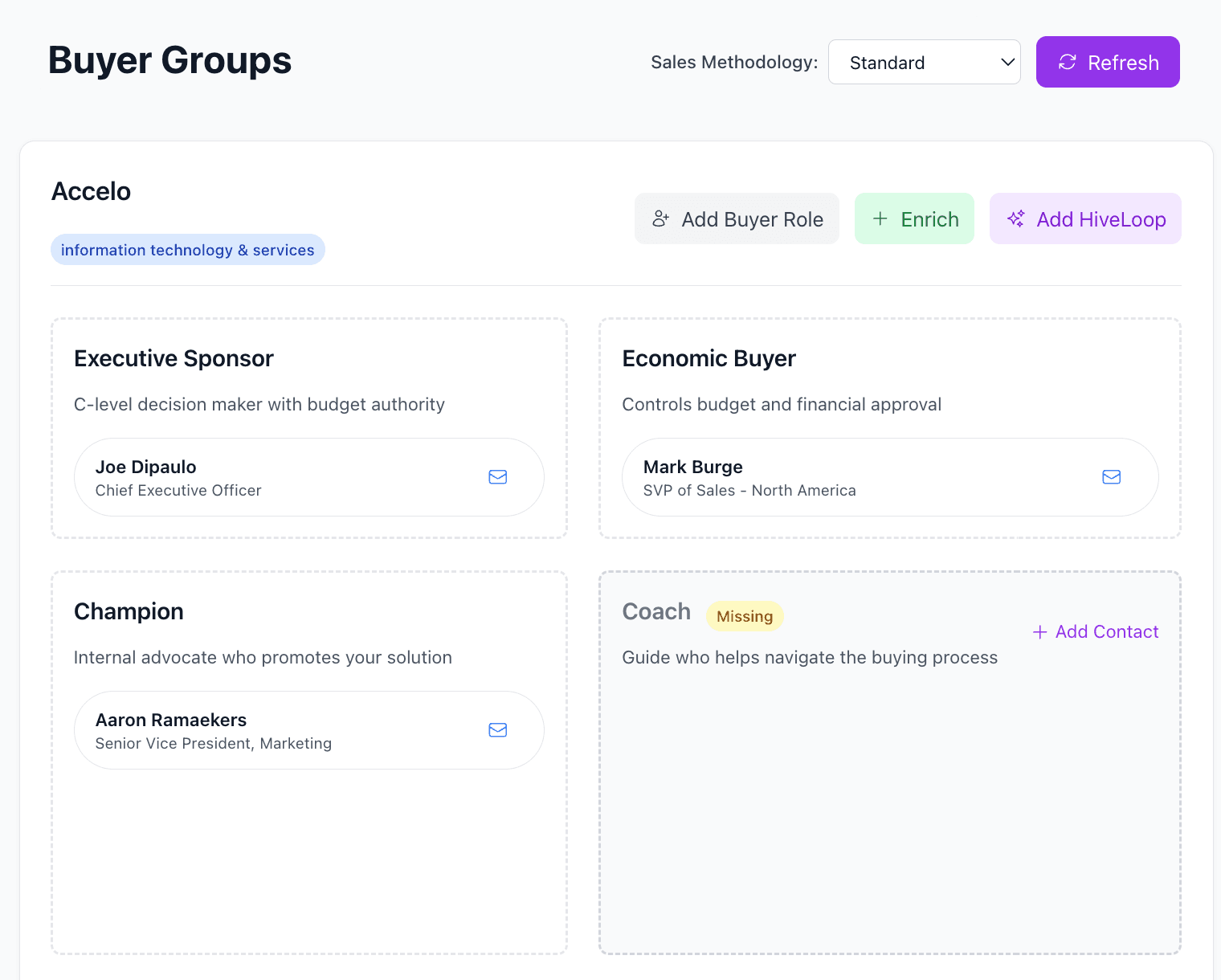
Complex B2B deals are won across coordinated buying groups, not isolated leads. Hivekind maps stakeholders dynamically across accounts and coordinates engagement around shared account context.
At scale, this is the difference between stalled single-threaded deals and multi-threaded accounts that close.
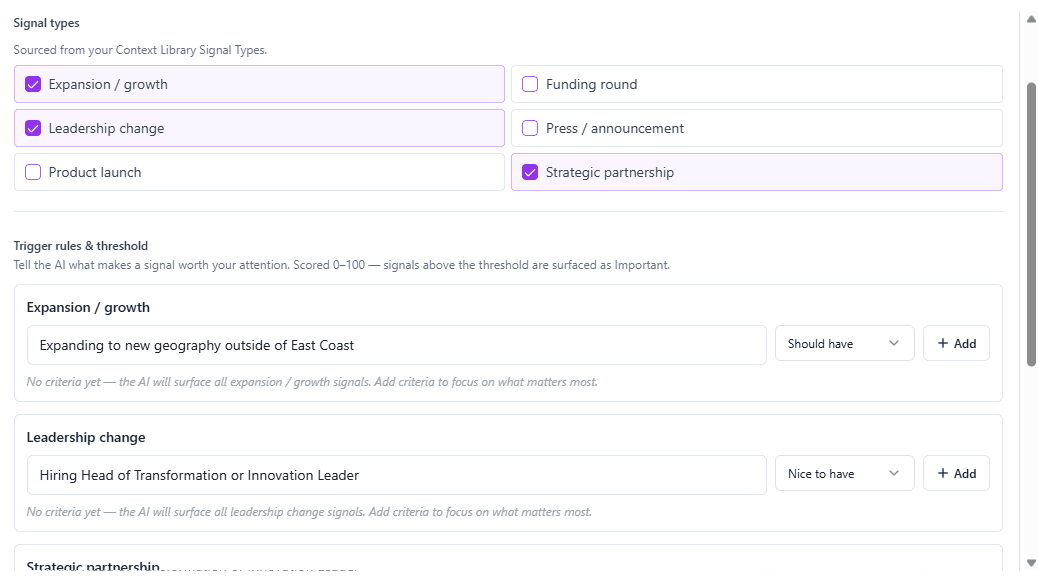
Instead of reacting after pipeline already exists, Hivekind acts while buying conditions are still emerging.
At scale, this is how revenue teams stop reacting to pipeline problems and prevent them before they surface in CRM — while the system learns from pipeline creation and revenue outcomes.
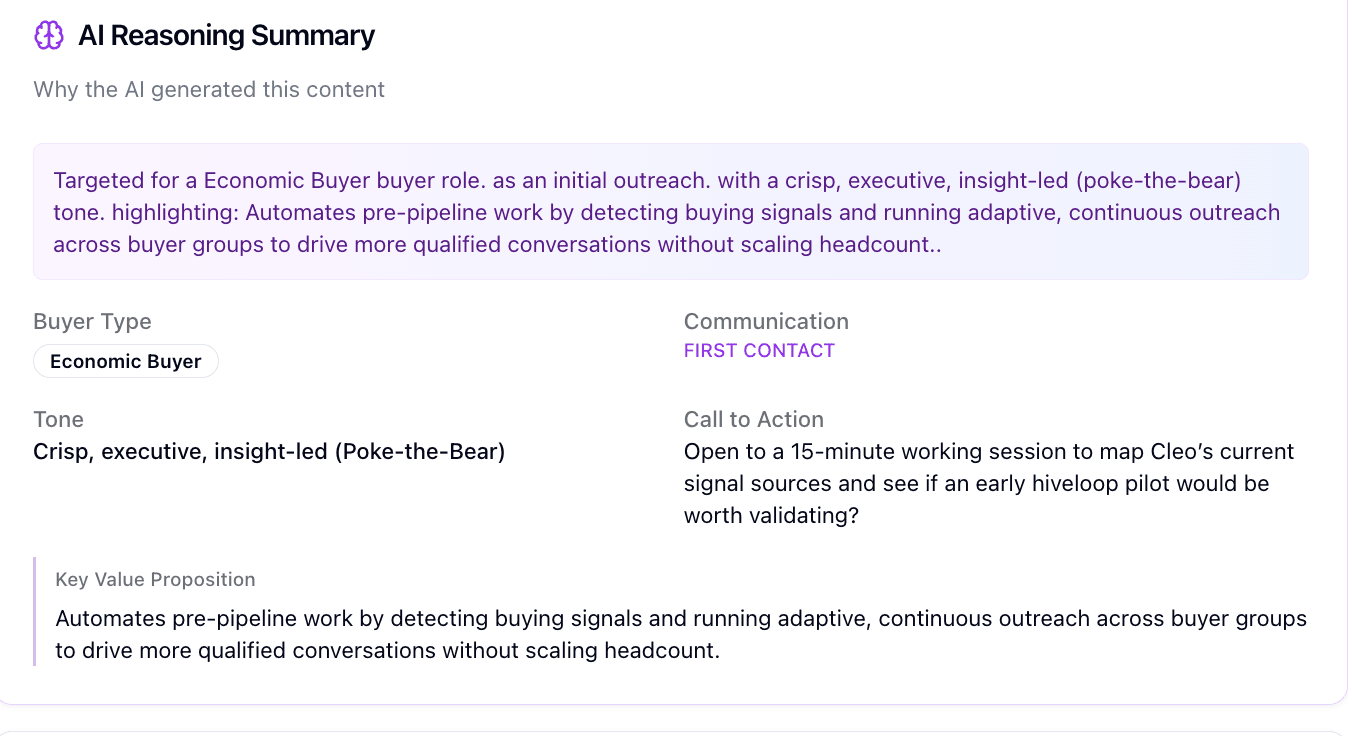
Only the right accounts enter pipeline — when buying conditions are favorable, buyer groups are engaged, and GTM effort is coordinated around measurable market demand.
Most GTM systems execute workflows. Hivekind compounds decision intelligence.
Every signal, engagement, objection, buyer interaction, and pipeline outcome strengthens how the system interprets future buying conditions and coordinates future GTM execution. Instead of institutional knowledge disappearing across CRMs, reps, and marketing ops, it accumulates as a contextual decision graph that sharpens with every engagement.
This is your GTM's compounding moat — others can copy your offerings, but they can't copy the accumulated decision intelligence.

Founder
Signal-based outbound, account expansion, event and tradeshow ROI, or buyer-group orchestration on key accounts.
See how continuous prioritization and coordinated execution change pipeline quality and address tool sprawl.
Review with our GTM engineers what's working, where to optimize, and plan broader rollout.